Developing a Next.js-Portfolio for a Product Designer
A Frontend Developement Project opening Perspectives with three.js
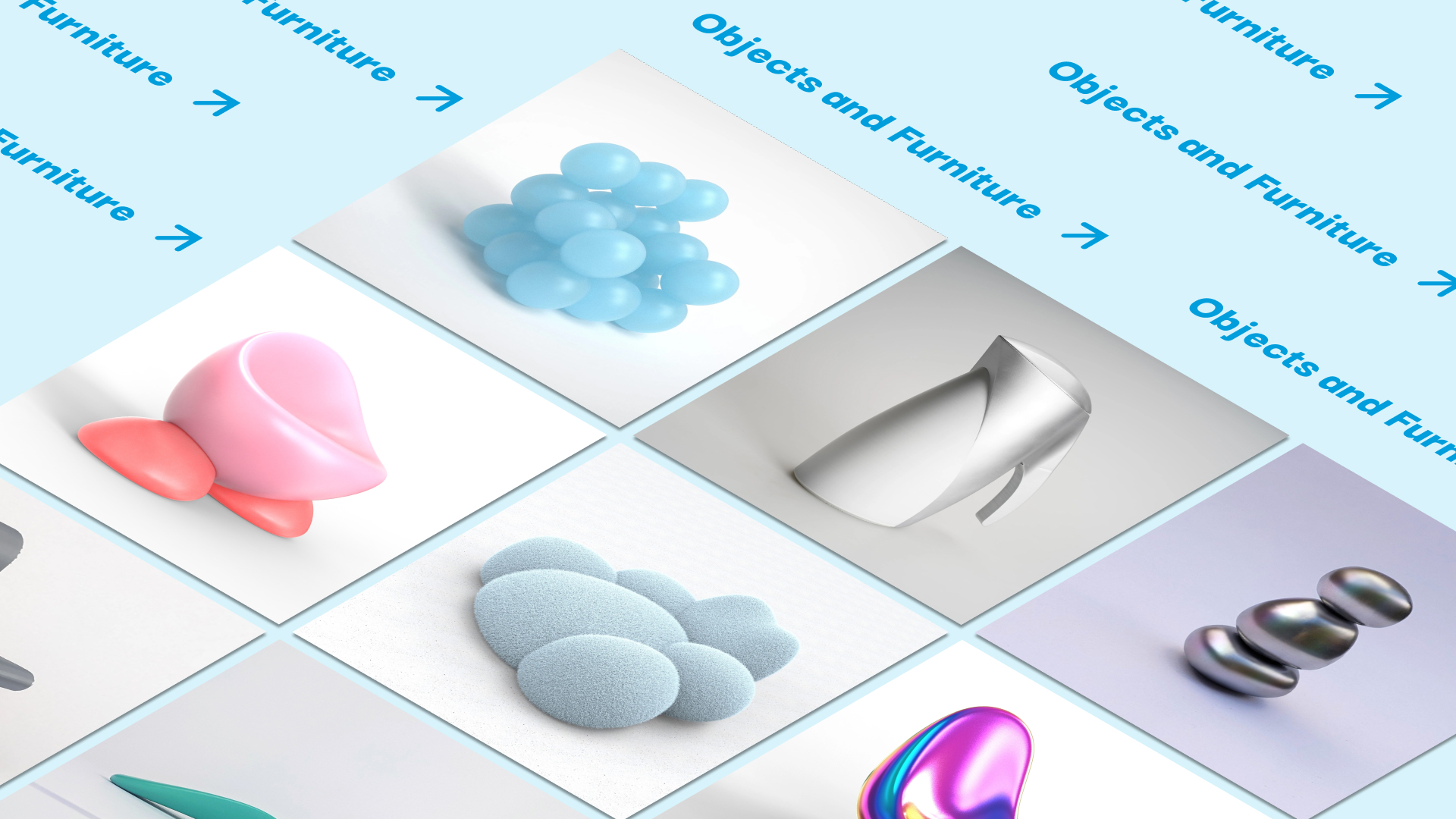
That was the question driving this project for a product designer. Instead of relying on flat galleries or PDF presentations, I built an interactive web experience that brings his objects and furniture designs into a spatial, almost tangible environment.
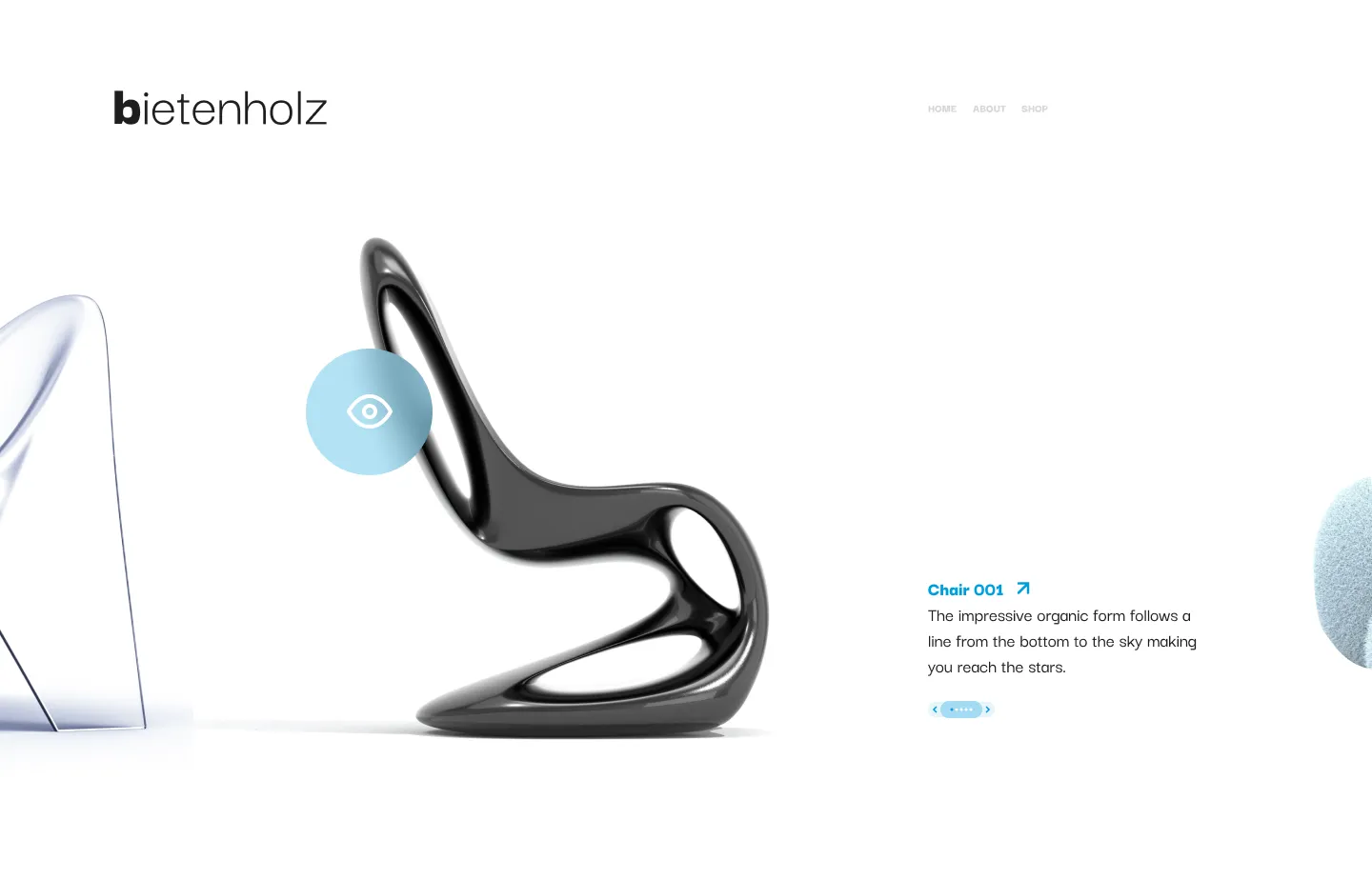
The site was developed with Next.js as the framework and three.js for rendering 3D visuals directly in the browser. This combination allowed us to merge robust performance and SEO with immersive, GPU-accelerated graphics. Every piece of furniture can be rotated, zoomed, and experienced in context, turning the website into a lightweight digital exhibition.
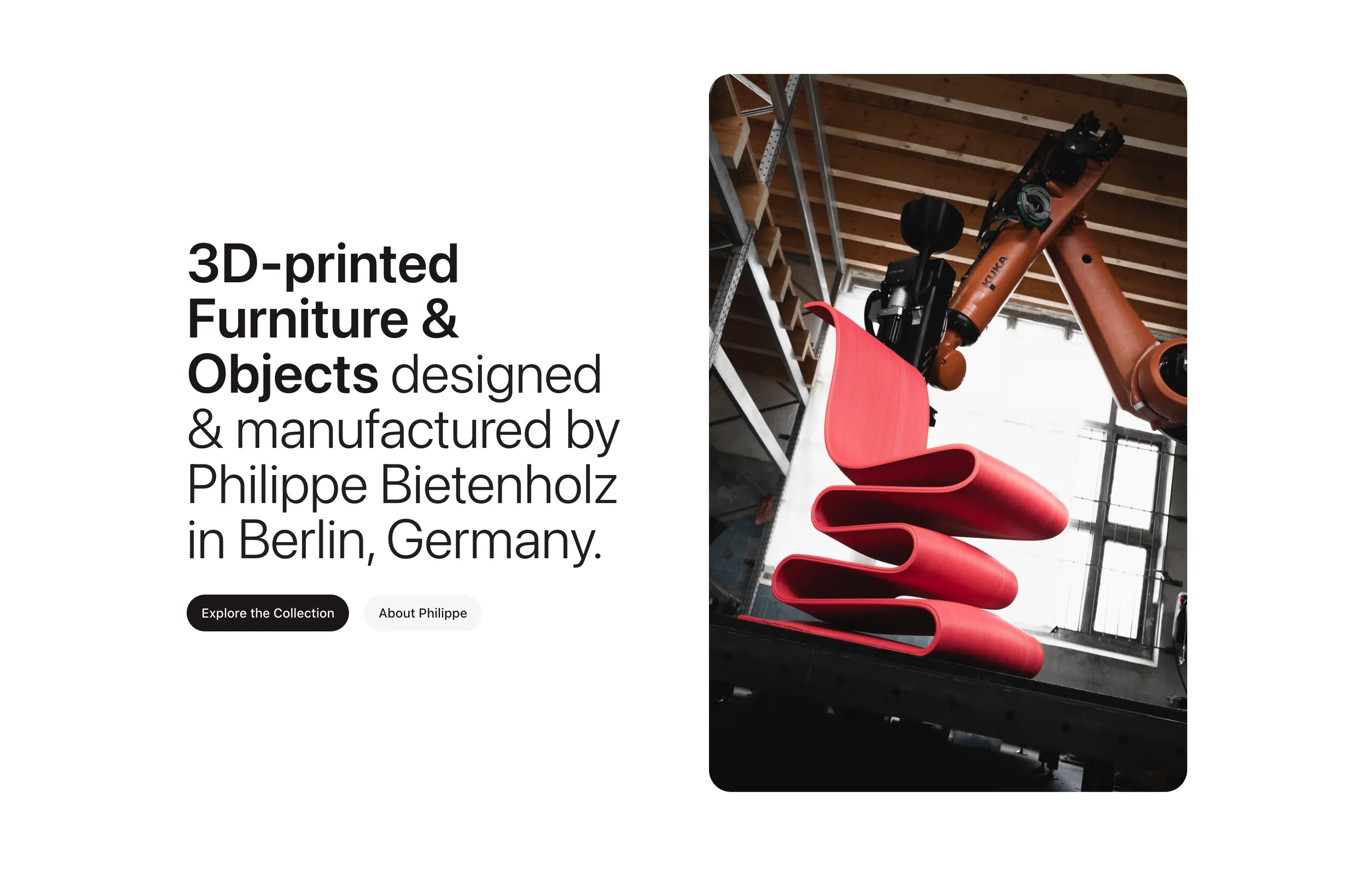
The design language is kept clean and minimal: white backgrounds, cyan highlights, and large-scale imagery let the organic forms of the furniture stand in the foreground. A modular grid organizes news, objects, exhibitions, and partners - giving the designer full flexibility to expand the portfolio over time.
Gallery-White
Background
RGB 242, 242, 242
Derived preview, not documented project tokens.
#FEFEFE
#FBFBFB
#F9F9F9
#F5F5F5
#F2F2F2
#C2C2C2
#919191
#616161
#303030
Blue
Brand
RGB 0, 158, 220
Derived preview, not documented project tokens.
#E6F5FC
#B3E2F5
#80CFEE
#40B6E5
#009EDC
#007EB0
#005F84
#003F58
#00202C
Cyan
Highlight
RGB 0, 236, 235
Derived preview, not documented project tokens.
#E6FDFD
#B3F9F9
#80F6F5
#40F1F0
#00ECEB
#00BDBC
#008E8D
#005E5E
#002F2F
Black
RGB 0, 0, 0
Derived preview, not documented project tokens.
#E6E6E6
#B3B3B3
#808080
#404040
#000000
#000000
#000000
#000000
#000000
Text on base colors
Contrast for black and white text. AA for normal text requires at least 4.5:1.
From a technical perspective, the challenge was to create a smooth 3D experience without heavy loading times. We used optimized GLTF models, lazy loading, and fine-tuned lighting settings to ensure that every scene runs fluidly on both desktop and mobile devices. The Next.js architecture provided the foundation for fast builds and scalable hosting.
<Canvas
  shadows
  linear
  dpr={[1, 2]}
  camera={{ position: [camPos.x, camPos.y, camPos.z], fov: 65 }}
  onCreated={({ gl, scene }) => {
    gl.shadowMap.enabled = true;
    gl.shadowMap.type = PCFSoftShadowMap;
    gl.toneMapping = ACESFilmicToneMapping;
    gl.toneMappingExposure = 1.2;
    gl.physicallyCorrectLights = true;
    scene.background = null;
  }}
>
  <Preload all />
  <Scene items={items} targetIndex={index} />
The result is more than just a portfolio website - it’s a digital stage for design. By blending frontend development with immersive 3D presentation, the project opens new perspectives on how product designers can present their work online: as interactive, living objects instead of static images.